

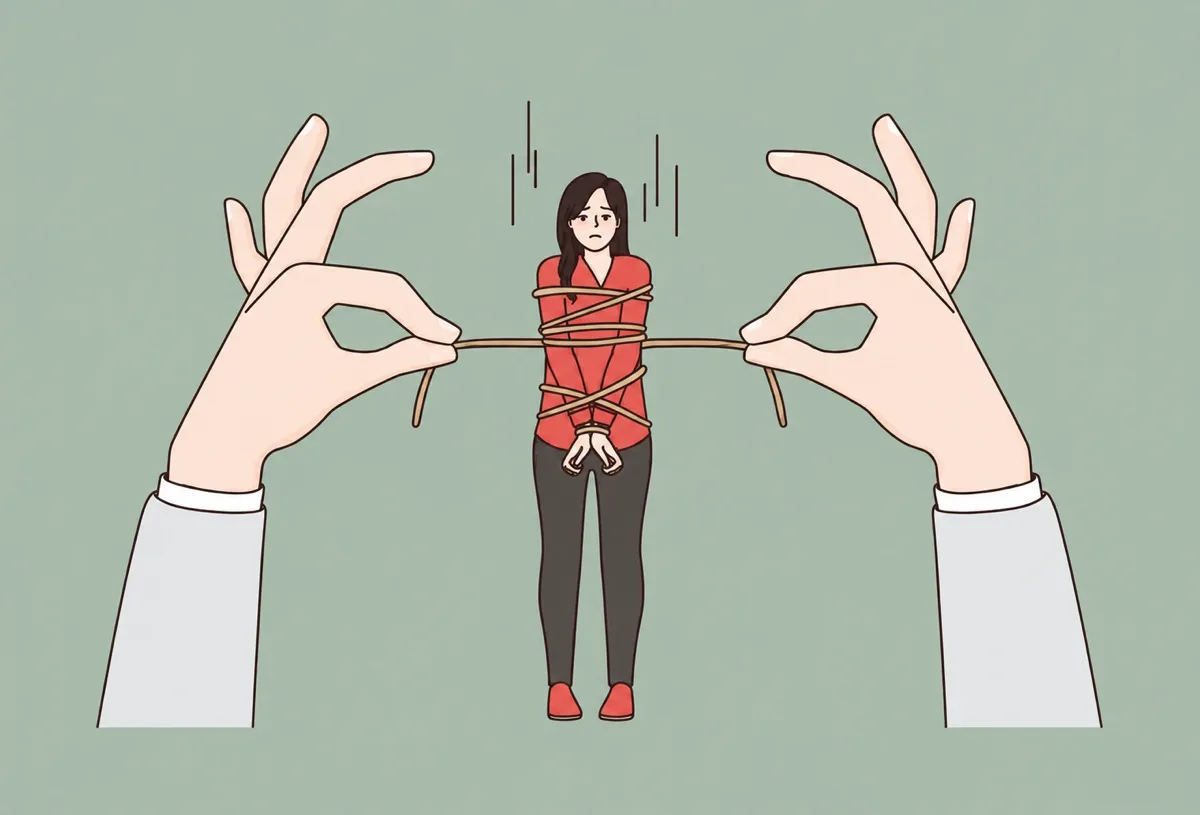
Have you ever felt that you need permission to meet your friends, explain every interaction, or carefully choose your words to avoid upsetting your partner? Perhaps your partner frequently checks your phone, questions your decisions, or makes you feel guilty for wanting personal space.
When these behaviours become recurring patterns of control, intimidation, or emotional manipulation, they can indicate an unhealthy relationship.
A toxic relationship is not simply a relationship in which two people argue or disagree. Conflict is a normal part of many relationships. The concern arises when one partner repeatedly undermines the other’s autonomy, emotional well-being, boundaries, or sense of safety.
Recognising these patterns can be difficult, particularly when controlling behaviour is mixed with affection, apologies, or promises to change.
In this article, Rooh Mind Care explains the signs of a toxic relationship, how to recognise a controlling partner, the potential effects on mental health, and the steps you can take to seek support.
What Is a Toxic Relationship?
A toxic relationship is a relationship characterised by recurring patterns of behaviour that harm one or both partners’ emotional well-being, autonomy, trust, or sense of safety.
These patterns may include excessive control, persistent criticism, emotional manipulation, intimidation, humiliation, or repeated violations of personal boundaries.
The term toxic relationship is commonly used in everyday language rather than as a formal psychiatric diagnosis.
Not every disagreement, misunderstanding, or difficult period makes a relationship toxic. What matters is the broader pattern: how frequently harmful behaviour occurs, whether both partners can express their needs freely, and whether attempts to resolve problems lead to meaningful change.
For example, a partner expressing concern about your safety is not inherently controlling. However, insisting on knowing your location at all times, demanding immediate replies, or punishing you for making independent decisions may indicate a pattern of coercive control.
The World Health Organization recognises psychological abuse and controlling behaviours within its definition of intimate partner violence. Such behaviour can occur alongside physical or sexual violence, but physical violence is not necessary for psychological abuse to be harmful.[1]
The key distinction is whether a relationship allows both people to retain their dignity, independence, and freedom to make decisions without fear.
What Are the Signs of a Toxic Relationship?
Toxic relationship patterns can develop gradually. Some behaviours may initially appear to be expressions of love, concern, or commitment. Over time, however, they may restrict one partner’s freedom or undermine their confidence.
Here are some warning signs to look for.
1. Your partner tries to control your decisions
A controlling partner may attempt to dictate what you wear, whom you meet, where you go, how you spend money, or how you use your time.
They may present these demands as concern or protection. However, there is an important difference between discussing a decision together and expecting one partner to obey the other.
Examples include:
- Insisting that you seek permission before meeting friends.
- Dictating what you should wear or how you should behave.
- Monitoring your location or demanding constant updates.
- Attempting to control your career, education, or finances.
- Becoming angry when you make independent decisions.
A healthy relationship involves mutual consideration, not the loss of personal autonomy.
2. Your partner is excessively jealous or suspicious
Jealousy is a human emotion and does not automatically indicate an unhealthy relationship.
The concern arises when jealousy becomes a justification for surveillance, accusations, restrictions, or intimidation.
For example, a partner might repeatedly accuse you of infidelity without evidence, demand access to your private messages, or insist that you stop interacting with colleagues or friends.
Over time, you may begin changing ordinary behaviour simply to prevent accusations.
This can create a relationship in which one person continually has to prove their innocence while the other assumes the authority to monitor them.
Trust should be built through communication and consistent behaviour, not enforced through surveillance.
3. You experience emotional manipulation
Emotional manipulation occurs when someone uses guilt, fear, shame, affection, or other emotional pressures to influence another person’s behaviour in an unhealthy way.
Examples include statements such as:
- “If you really loved me, you would do this.”
- “After everything I have done for you, you owe me.”
- “You are responsible for making me angry.”
- “Nobody else would put up with you.”
- “If you leave me, you will regret it.”
One isolated statement does not necessarily establish a pattern of manipulation. Context, frequency, intent, and the effect on the relationship matter.
However, repeated emotional pressure can make you feel responsible for managing your partner’s emotions at the expense of your own needs.
You can care about your partner’s feelings without accepting responsibility for every emotion or reaction they experience.
4. Your partner makes you doubt your own experiences
Gaslighting is a form of psychological manipulation in which a person repeatedly undermines another person’s confidence in their perceptions, memories, or understanding of events.
For example, a partner may repeatedly deny things they said or did, insist that your memories are unreliable, or portray your reasonable concerns as evidence that something is wrong with you.
You might hear statements such as:
- “That never happened. You make things up.”
- “You are imagining things again.”
- “You are too sensitive to understand anything.”
- “Everyone knows you cannot trust your own judgement.”
Disagreements about memories are not automatically gaslighting. People can remember events differently without deliberately manipulating each other.
The concern is a persistent pattern in which one person’s account is systematically dismissed or distorted, leaving the other person increasingly unsure of their own judgement.
If you frequently find yourself questioning your memory, apologising for raising legitimate concerns, or depending on your partner to tell you what really happened, it may be worth examining the relationship more closely.
5. Your partner isolates you from friends and family
A controlling partner may gradually discourage you from maintaining relationships outside the partnership.
They might criticise your friends, create arguments before family visits, become upset when you spend time with other people, or insist that your relationship should be your only priority.
In some situations, the partner may attempt to restrict access to money, transportation, communication devices, or other resources that make independence possible.
Isolation can make it more difficult to recognise harmful behaviour and obtain support.
Maintaining friendships, family relationships, professional connections, and personal interests is an important part of a healthy adult life.
A loving partner may want to spend time with you, but they should not need to eliminate your other relationships to feel secure.
6. Your partner repeatedly disrespects your boundaries
Personal boundaries help establish what you are comfortable with and what you are not willing to accept.
These may relate to privacy, physical intimacy, personal space, communication, finances, or time spent independently.
A partner who respects your boundaries may disagree with them or ask questions, but should be willing to engage in an honest conversation without intimidation or punishment.
Concerning behaviours include:
- Continuing to pressure you after you have said no.
- Reading your private messages without permission.
- Using your personal disclosures against you during arguments.
- Pressuring you into sexual activity.
- Punishing you emotionally for asking for space.
Boundaries are not a method of controlling another person. They are a way of communicating what you need and deciding how you will respond when those needs are repeatedly disregarded.
7. You feel afraid of your partner’s reactions
One important warning sign is changing your behaviour because you are afraid of how your partner might react.
You may rehearse conversations, hide harmless activities, avoid raising concerns, or constantly monitor your partner’s mood.
This can create a state of persistent vigilance in which ordinary interactions feel emotionally exhausting.
Not every instance of avoiding an argument indicates abuse. People sometimes choose not to engage in a disagreement because they are tired or need time to think.
However, when fear consistently prevents you from expressing your opinions, making decisions, or living freely, the relationship deserves serious attention.
8. Your partner apologises but the behaviour never changes
Many relationships experience conflict. What matters is how partners respond to it.
A meaningful apology generally involves acknowledging the behaviour, recognising its impact, taking responsibility, and making a sustained effort to change.
In an unhealthy relationship, the same harmful behaviour may repeatedly occur, followed by apologies, affection, promises, or temporary improvements.
For example, your partner may insult you during an argument, apologise the following day, and then repeat the behaviour a week later.
Apologies are important, but they cannot substitute for accountability.
When assessing whether a relationship is improving, pay attention to consistent changes in behaviour rather than promises alone.
What Is the Difference Between a Toxic Relationship and a Controlling Relationship?
The terms overlap, but they are not identical.
A toxic relationship is a broad term describing recurring relationship patterns that undermine emotional well-being or mutual respect. A controlling relationship involves attempts to restrict another person’s freedom, choices, relationships, or behaviour.
A relationship may be unhealthy because both partners communicate poorly, repeatedly criticise one another, or struggle to resolve conflict.
By contrast, a controlling or coercive relationship may involve a persistent imbalance of power in which one partner attempts to dominate the other.
This distinction matters because ordinary relationship conflict and coercive control do not always require the same response.
| Relationship conflict | Controlling or coercive behaviour |
|---|---|
| Both partners can express disagreement. | One partner may be afraid to disagree. |
| Both can make independent decisions. | One partner attempts to dictate the other’s choices. |
| Boundaries can be discussed and negotiated. | Boundaries are repeatedly ignored or punished. |
| Both partners can take responsibility for their behaviour. | Responsibility may be shifted onto the controlled partner. |
| Disagreements do not routinely involve intimidation. | Intimidation, surveillance, threats, or restrictions may occur. |
The World Health Organization identifies controlling behaviours as part of its framework for understanding intimate partner violence.[1] The National Domestic Violence Hotline also describes patterns of power and control as important considerations when evaluating potentially abusive relationships.[2]
How Can a Toxic Relationship Affect Your Mental Health?
A persistently unhealthy relationship can affect how you feel, think, behave, and relate to other people.
The effects vary from person to person. Not everyone who experiences relationship difficulties develops a mental health condition, and mental health symptoms can have multiple causes.
Nevertheless, repeated humiliation, fear, isolation, or psychological abuse can contribute to significant distress.
Anxiety and constant overthinking
You may spend considerable time analysing messages, anticipating your partner’s reactions, or wondering whether you have done something wrong.
If disagreements regularly lead to accusations or punishment, you may become increasingly anxious about everyday decisions.
Reduced self-esteem
Repeated criticism, humiliation, or invalidation can undermine your confidence.
You may begin to believe that your needs are unreasonable, that you cannot make good decisions, or that you are responsible for the relationship’s problems.
These beliefs can persist even when you are away from the relationship.
Emotional exhaustion
Managing repeated conflict can consume considerable emotional energy.
You may feel drained, irritable, distracted, or unable to concentrate on work, education, friendships, or personal interests.
Social withdrawal
If your partner discourages outside relationships, or if you feel embarrassed about what is happening, you may gradually withdraw from friends and family.
Reduced social support can make an already difficult situation feel more overwhelming.
Depressive symptoms
Persistent relationship stress may contribute to sadness, hopelessness, reduced motivation, sleep difficulties, or loss of interest in activities.
The WHO identifies intimate partner violence as an important public health concern associated with physical and mental health consequences.[1][5]
If you are experiencing persistent anxiety, low mood, sleep disturbances, or difficulty functioning, consider speaking with a qualified mental health professional.
You do not need to wait until your symptoms become severe to seek support.
Why Is It Sometimes Difficult to Leave a Toxic Relationship?
People sometimes wonder why someone remains in a relationship that appears harmful from the outside.
This question overlooks the emotional, practical, financial, and social factors that can make leaving difficult.
There is no single explanation.
You still love your partner
You may care deeply about someone while recognising that some of their behaviour is hurting you.
Positive memories, affection, shared experiences, and hopes for the future can coexist with distress.
Love does not automatically make a relationship healthy, but recognising harmful behaviour does not mean that your feelings disappear immediately.
You hope things will improve
If your partner sometimes behaves affectionately, acknowledges their mistakes, or promises to change, you may hope that the relationship can return to what it once was.
Hope is understandable. The important question is whether improvement is demonstrated consistently over time.
You have invested years in the relationship
You may have invested time, money, emotional energy, or significant life decisions in the partnership.
Leaving can feel like losing those investments.
However, the amount of time already spent in a relationship does not determine whether continuing it is right for you.
You fear the consequences of leaving
Concerns about housing, finances, family expectations, children, social judgement, or retaliation can make leaving complicated.
In some circumstances, a partner may threaten violence, expose private information, interfere with finances, or threaten self-harm to prevent separation.
These situations require careful consideration of safety and support.
If you fear your partner’s reaction, you do not have to announce your plans or confront them before seeking confidential advice.
Remaining in a difficult relationship does not mean that you are weak. Understanding your circumstances and identifying realistic options can be a more useful starting point than blaming yourself.
How to Deal With a Controlling Partner
The appropriate response depends on the nature of the behaviour, its severity, and whether you feel safe.
Not every unhealthy relationship is abusive, and not every relationship can be repaired through better communication.
The following steps may help you assess your options.
1. Recognise the pattern
Instead of evaluating each incident in isolation, consider what happens repeatedly.
Ask yourself:
- Can I disagree with my partner without fearing the consequences?
- Am I free to maintain friendships and personal interests?
- Does my partner respect my privacy and boundaries?
- Can I make independent decisions?
- When my partner hurts me, do they take responsibility and change their behaviour?
- Do I feel emotionally and physically safe in this relationship?
These questions are intended to support reflection, not to diagnose your partner.
You do not need to prove that a relationship meets a particular label before taking your discomfort seriously.
2. Reconnect with trusted people
Consider speaking with someone you trust who will listen without pressuring you to make an immediate decision.
This could be a friend, family member, counsellor, or another professional who can help you evaluate your circumstances.
Maintaining connections outside your relationship can provide emotional support and help you consider options more clearly.
If your partner monitors your phone or communications, think carefully about how to contact people safely.
3. Establish boundaries where it is safe to do so
If the relationship is not characterised by intimidation or abuse, a clear conversation about boundaries may be helpful.
For example, you might explain that you value your privacy and will not agree to routine phone inspections, or that maintaining friendships is important to you.
Focus on what you need and what you are willing to accept.
However, you are not obligated to confront a controlling partner if doing so could place you at risk.
When coercion, intimidation, or threats are present, prioritising safety and obtaining specialised support may be more appropriate than attempting to negotiate boundaries directly.
4. Consider professional mental health support
A psychologist or qualified counsellor can help you understand your emotional responses, identify relationship patterns, rebuild confidence, and evaluate your options.
Therapy may also help if you are experiencing anxiety, persistent self-doubt, low mood, or difficulty trusting your judgement after repeated emotional distress.
You do not need to have a psychiatric diagnosis to benefit from psychological support.
Individual counselling can provide a confidential setting to discuss your concerns and work towards decisions that reflect your needs and circumstances.
5. Develop a safety plan if you fear your partner
If your partner has threatened you, stalked you, used violence, restricted your movements, or made you fear for your safety, consider seeking specialist domestic abuse support.
Depending on your circumstances, a safety plan may include:
- Identifying a trusted person who can help.
- Keeping important documents and essential medication accessible.
- Considering safe access to money, transportation, and communication.
- Identifying a safe place you could go if necessary.
- Reviewing location-sharing settings and account security from a safe device.
- Seeking confidential advice before announcing plans to leave.
Do not undertake these steps in a way that could expose you to additional danger. A specialist support service can help you assess what is appropriate for your situation.
In India, the national emergency number is 112. The government also operates the Women Helpline at 181, subject to local availability and service arrangements.[3][4]
If you are in immediate danger, contact emergency services or move to a safer location if possible.
6. Evaluate change through actions, not promises
If you are considering continuing the relationship, look for sustained changes in behaviour.
Does your partner acknowledge the harm without blaming you? Do they respect your boundaries when frustrated? Are you able to make independent decisions without punishment?
Lasting improvement requires accountability and consistent behaviour, not simply an apology after every conflict.
You are allowed to reassess the relationship if the same patterns continue.
Can a Toxic Relationship Be Repaired?
Some unhealthy relationships can improve when both partners genuinely recognise the problems, take responsibility, and work consistently towards change.
Repair may involve learning healthier communication skills, developing emotional regulation, respecting boundaries, and addressing recurring disagreements.
However, improvement requires more than one partner trying harder.
You cannot single-handedly create a healthy relationship with someone who repeatedly dismisses your concerns or refuses to take responsibility for harmful behaviour.
It is also important to distinguish relationship difficulties from abuse.
Where there is coercive control, intimidation, or violence, joint counselling may not be appropriate as an initial step. It can sometimes create additional risks, particularly if disclosures during sessions are later used against the person experiencing abuse.
In these circumstances, individual support and guidance from a specialist domestic abuse service may be safer.
The priority should be the safety and well-being of everyone involved, rather than preserving the relationship at any cost.
When Should You Seek Professional Help?
Consider speaking with a mental health professional if:
- You regularly feel anxious, guilty, or emotionally exhausted because of your relationship.
- You have lost confidence in your judgement or self-worth.
- You find it difficult to express your needs or maintain personal boundaries.
- You feel isolated from friends and family.
- Relationship stress is affecting your sleep, concentration, work, or daily functioning.
- You are struggling to decide whether to continue the relationship.
- You want support rebuilding your confidence after a difficult relationship.
You do not need to wait until you leave the relationship to seek help.
A psychologist can help you explore your experiences, identify patterns, and develop strategies for protecting your emotional well-being.
If you are experiencing threats, stalking, physical violence, sexual coercion, or fear of retaliation, consider specialist domestic abuse support alongside any mental health care.
Frequently Asked Questions About Toxic Relationships
What are the biggest signs of a toxic relationship?
Common warning signs include repeated disrespect, emotional manipulation, excessive jealousy, controlling behaviour, persistent criticism, isolation from loved ones, and disregard for personal boundaries.
The overall pattern matters more than a single disagreement. A relationship deserves closer attention when harmful behaviour repeatedly undermines your autonomy, emotional well-being, or sense of safety.
How can you tell if your partner is controlling you?
A partner may be controlling you if they repeatedly attempt to dictate your decisions, monitor your communications, restrict your friendships, control your finances, or punish you for acting independently.
A particularly important warning sign is feeling afraid to disagree or make ordinary decisions without anticipating negative consequences.
Is emotional abuse possible without physical violence?
Yes. Psychological abuse can occur without physical violence.
Repeated humiliation, intimidation, coercion, threats, isolation, and controlling behaviour can cause significant emotional distress. Physical violence is not a prerequisite for recognising that a relationship may be harmful.
What is the difference between jealousy and controlling behaviour?
Jealousy is an emotion that someone may experience and communicate.
Controlling behaviour occurs when that emotion is used to justify restricting another person’s freedom, monitoring their activities, making accusations, or imposing unreasonable demands.
Feeling jealous does not automatically make someone abusive. The concern lies in how they respond to the feeling and whether their behaviour undermines their partner’s autonomy or safety.
Can a controlling partner change?
Change is possible when a person genuinely acknowledges their behaviour, takes responsibility, and makes sustained efforts to stop controlling or abusive actions.
However, promises and temporary improvements are not sufficient evidence of change. Your safety and well-being should not depend on waiting indefinitely for someone else to change.
Should I go to couples therapy if my relationship is toxic?
Couples therapy may help when both partners can participate freely, communicate honestly, and take responsibility without fear of retaliation.
However, when a relationship involves coercive control, intimidation, or violence, joint therapy may be unsafe or inappropriate. Individual counselling and specialist domestic abuse support may be better starting points.
How does a toxic relationship affect mental health?
An unhealthy relationship may contribute to anxiety, emotional exhaustion, reduced self-esteem, social withdrawal, sleep difficulties, and depressive symptoms.
The impact varies between individuals. If symptoms persist or interfere with daily life, a qualified mental health professional can help assess your needs and identify appropriate support.
How do I leave a toxic relationship safely?
If you are not afraid of your partner and the main concerns involve relationship incompatibility or recurring conflict, you may be able to plan a separation through direct communication and practical arrangements.
If you fear threats, violence, stalking, financial retaliation, or other forms of coercion, seek confidential advice and develop a safety plan before announcing your intentions, where possible.
There is no single approach that is safest for everyone.
Can therapy help after a toxic relationship?
Yes. Individual therapy can help you process difficult experiences, understand recurring relationship patterns, rebuild self-confidence, establish boundaries, and work through anxiety or low mood.
The purpose is not to assign blame automatically but to help you understand what happened and make informed decisions about your well-being and future relationships.
When is it time to reconsider a relationship?
It may be time to reconsider a relationship when harmful patterns continue despite clear communication, your boundaries are repeatedly violated, your independence is restricted, or you feel consistently unsafe or diminished.
You do not need to wait for physical violence or reach a particular level of distress before seeking support or considering your options.
You Deserve a Relationship Where You Feel Safe, Respected, and Heard
A healthy relationship does not require you to abandon your independence, constantly prove your loyalty, or remain silent to prevent conflict.
Every relationship has difficulties, but mutual respect, accountability, and the freedom to express yourself should remain possible.
If you recognise some of these patterns in your own relationship, give yourself permission to take your concerns seriously. You do not have to make every decision immediately, and you do not have to navigate the situation alone.
Speaking with a qualified mental health professional can help you understand your experiences, explore your options, and identify the support that is right for you.
Talk to someone about your relationship
Rooh Mind Care offers mental health consultations and psychological support to help individuals navigate emotional difficulties and work towards improved well-being. Sessions are confidential, in Lucknow and online. If you are in danger now, call 112.
Sources and further reading
- World Health Organization. Violence against women (intimate partner violence, including psychological abuse and controlling behaviours, and associated health consequences). who.int
- National Domestic Violence Hotline. Information on relationship abuse, patterns of power and control, and support options. thehotline.org
- Government of India. Emergency Response Support System (112). 112.gov.in
- Ministry of Women and Child Development, Government of India. Women-centred support initiatives and helplines. spniwcd.wcd.gov.in
- World Health Organization. Violence against women prevalence estimates, 2018: a global report on the prevalence of intimate partner violence and its public health implications. who.int