

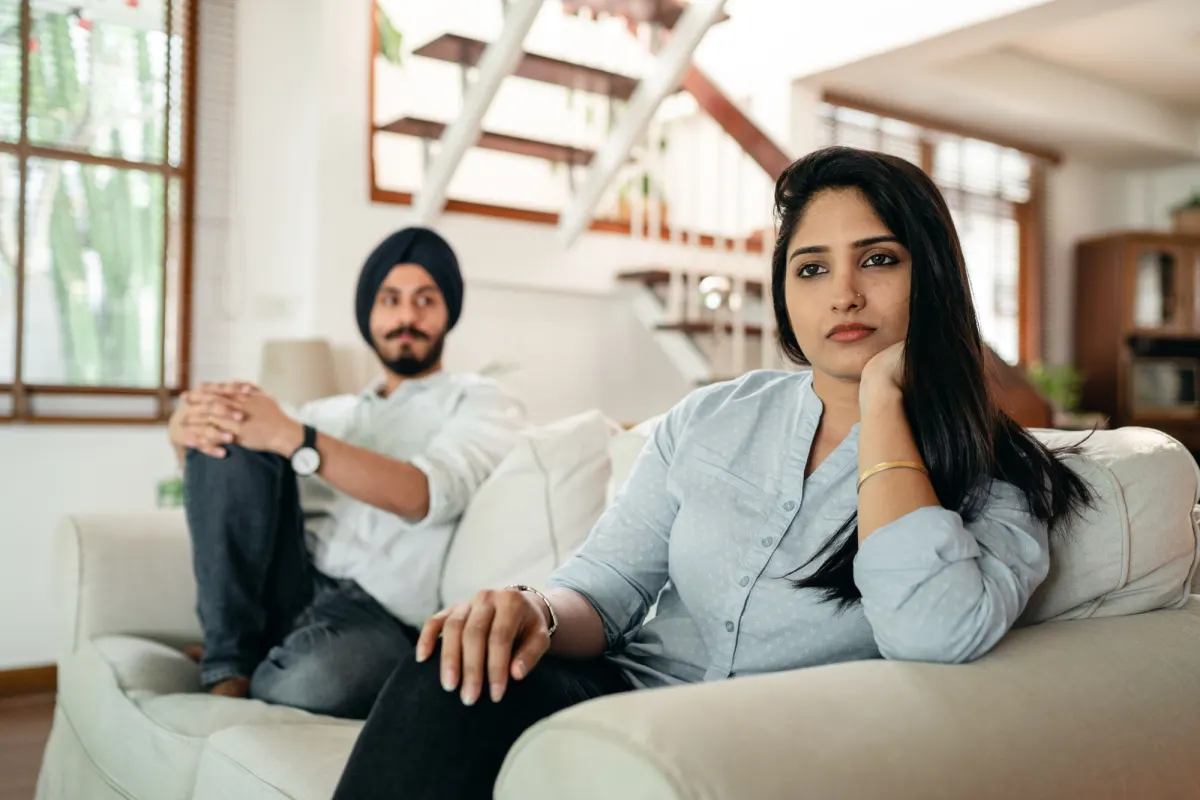
Couples therapy at Rooh Mind Care is an 80-minute session with both partners present. It is longer than an individual session for a reason: two people need room to speak, and the useful part of the conversation often arrives after the first twenty minutes.
It is sometimes called marriage counselling or relationship counselling; the work is the same. You do not need to be married, and you do not need to be in crisis. Couples come at very different points — some are deciding whether to stay together, some are already solid and want to argue better, some are navigating a specific rupture.
What couples bring
- The same argument on repeat — different surface topic, identical shape, never resolved.
- Communication breakdown — one partner pursues, the other withdraws; or both have stopped trying.
- Trust after a breach — infidelity, financial secrecy, or a pattern of broken commitments.
- Intimacy and desire — mismatch in needs, loss of closeness, sex that has become a source of tension.
- In-laws and joint family dynamics — boundaries, loyalty binds, and the pressure of living with or near extended family. Where parents or in-laws need to be in the room too, family therapy may fit better.
- Parenting disagreements — different instincts about discipline, screens, schooling or religion.
- Major transitions — a new baby, relocation, job loss, illness, one partner moving abroad.
- Deciding whether to continue — including working out how to separate with less damage, when that is the honest answer.
How it works
The first session is for the therapist to hear both accounts. You will each be asked what you want out of this and what you think the other person would say the problem is — the gap between those answers is usually where the work starts.
From there sessions focus on what actually happens between you: the pattern, not the incident. The aim is not for the therapist to decide who is right. It is for each of you to be able to hear the other without the conversation collapsing.
Affirmative practice
Rooh Mind Care works with queer couples, interfaith and intercaste couples, long-distance couples and non-traditional relationship structures. Your relationship will not be treated as a deviation to be explained.
Fees
80 minutes, both partners₹2,800
Pay now or pay later. Book a single session with just ₹2$1. It counts towards your fee, and you pay the rest before your session.
One fee covers the session, not each person. Live fees for your region are on the homepage fees section.
Common questions
What if my partner will not come?
Start on your own. Individual therapy focused on a relationship is genuinely useful, and it is common for a reluctant partner to join later once they see what the sessions are actually like.
Can we do couples therapy online if we live in different cities?
Yes. Both partners join the same secure video call from wherever they are. This is common for long-distance couples and for couples where one partner works abroad.
Will the therapist tell us who is right?
No. The therapist's job is the pattern between you, not a verdict. Most recurring arguments are not won by either side — they are maintained by a cycle both people are caught in.
How long does couples therapy take?
Many couples work over eight to twelve sessions, though it varies a great deal with what you are dealing with. Progress is reviewed openly rather than assumed.
What if we decide to separate?
That is a legitimate outcome, and therapy can make it less destructive — particularly where children are involved. A therapist's job is not to keep every couple together.
Ready when you are
Fees are shown in full before you book — no hidden charges. Sessions run online worldwide, and in person in Lucknow.